Categories
Abstract and Op-Art

The Nomadic Easel: How to Build a Thriving Art Practice Without a Dedicated Studio

The dream is a sun-drenched loft, floor-to-ceiling windows, and white walls waiting for 10-foot canvases. The reality? A dining table that must be cleared by 6 PM, a bedroom corner fighting for space with a laundry basket, or the persistent hum of the living room TV while you try to mix the perfect cerulean.

If you are an artist working from home without a designated ‘studio,’ you are in good, historical company. Many masterpieces were born in kitchens, bedrooms, and rented attics. The lack of a separate room is not a barrier to creation; it is a design challenge. To thrive, you don’t need a room; you need sanctuary and system.

This guide is about carving out that space—physically and mentally—within the footprint you already have. We will explore how to claim your territory in dual-purpose rooms and, crucially, how to master creative storage so your supplies don’t overwhelm your life.

Defining the Micro-Studio: It’s Mental First

Before you move a single tube of paint, establish the mental boundary. Your “studio” exists wherever you choose to make art. The physical space is secondary to the ritual of creation. If your only spot is the kitchen table, the act of laying out your palette is the signal that the studio is “open.”

The goal is to minimize the “friction to create.” If it takes twenty minutes to locate your brushes and set up an easel, you won’t do it on a weeknight. Success depends on organization that allows for immediate action.

Room-by-Room Strategies: Claiming Your Corner

Every room in your home holds secret potential. Here is how to activate the most common multi-use spaces.

1. The Living Room or Den: The Social Studio

This is the most common setup. The challenge is balancing aesthetics with utility. You want a creative space, but your family doesn’t want to live inside a messy workshop.

• The Strategy: Zonation. Define your area with a rug (a drop cloth disguised as a rug works wonders) or a distinct lighting source.

• The Setup: Invest in a decorative armoire or cabinet. Behind closed doors, it’s a chaotic explosion of inspiration. When open, the doors can hold palettes, and the shelves act as storage. If space is tight, a beautiful screen can act as a visual separator, blocking your setup from view when you entertain.

2. The Bedroom: The Intimate Retreat

The bedroom offers privacy but risks being too cozy or, worse, messy when you need to sleep.

• The Strategy: The “Clutter-Free Zone.” Your creative space must be strictly contained.

• The Setup: The closet is your secret weapon. If you have a standard reach-in closet, consider removing the hanger rod and installing a small floating desk. Add vertical shelving and good lighting. Presto: a “Cloffice” or “Clostudio.” Close the doors, and the work is gone for the night. Alternatively, a small, elegant secretary desk (the kind with the fold-down front) provides a self-contained working surface in a corner.

3. The Garage or Basement: The “Heavy Duty” Area

The garage or an unfinished basement is excellent for large-scale, messy work (like using spray paints, resin, or power tools), but there are material storage concerns.

• The Strategy: Split Personality. The garage is for execution; the house is for curation.

• The Setup: Use heavy-duty, rolling workbenches. Create “creation stations” that can be parked against the wall. Crucially: For temperature-sensitive items (oil paints, canvases, paper, expensive brushes), you must create a climate-controlled “Supply Depot” inside the main house (like a cool linen closet or a utility room). Carry only what you need for that day’s session out to the garage.

4. The Large Hallway or Landing: The Transitional Space

Don’t overlook wide hallways or the awkward space at the top of the stairs. These are excellent for quiet work like illustration, digital art, or sculpting.

• The Strategy: Vertical Maximization. You have floor space, but limited width.

• The Setup: Install shallow shelving units (like IKEA’s picture ledge systems) all the way up the wall to store materials. A narrow console table can serve as your desk. Use wall-mounted lighting to save desk surface area.

5. The Dining Room: The Classic Compromise

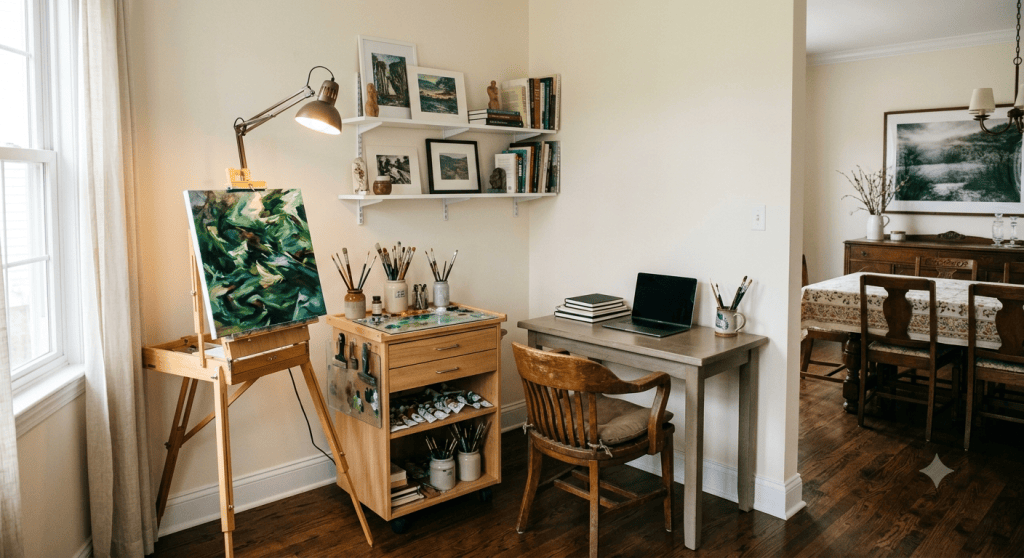
The dining room is often used only occasionally, making it prime real estate. The challenge is quick conversion. As seen in the photo above, this room is ideal for establishing a visual boundary.

• The Strategy: The Mobile Pod. Everything must move efficiently.

• The Setup: Designate one corner as “The Nook.” In this setup, a rolling utility cart (the artist’s best friend) holds all daily tools. Floating shelves and a compact desk create a permanent anchor without dominating the room. The easel is positioned near a natural light source. When a dinner party happens, the cart is rolled into a closet, the chair is moved, and the dining room is restored.

Creative Storage Ideas: The Art of Containment

When you don’t have a whole room, you must utilize creative, non-traditional storage. The key is visibility: if you can’t see it, you won’t use it.

The Wall as a Workhorse

• The Pegboard Power: Install a large pegboard over your small desk. Use hooks, small baskets, and clips to hang brushes, palettes, rulers, tubes of paint (crimp-clipped), and even small canvases. This maximizes workspace and keeps tools visible.

• Magnetic Strips: Use magnetic knife strips to hold palette knives, metal clips (for holding papers or small panels), and certain metal-encased tool handles.

• Clear Bins: Small parts organizers, usually used for hardware, are perfect for beads, small tubes, pastels, and pencil leads. Wall-mount them.

• Spice Racks for Paints: Small, wooden spice racks (like the IKEA BEKVÄM) are inexpensive and perfectly sized for holding 37ml tubes of acrylic or oil paint.

• Under-the-Bed Storage: For finished (and dry!) canvases, drawings, and paper, buy shallow, rolling storage bins designed for under-bed use. This keeps large-format work flat and safe. For unframed works on paper, protect them in clear sleeves before layering them in these bins.

Mobiles and Furniture Hacks

• The Triple-Threat Cart: The RÅSKOG rolling cart from IKEA (or any 3-tier metal cart) is an artist’s portable studio.

Tier 1: Paints and palette.

Tier 2: Brushes and jars.

Tier 3: Sketchbooks and mediums.

The “Art” Box

Create a single, high-quality, sturdy box (like a decorative photo box) that holds only your essential daily tools: 5 brushes, your palette, basic rags, and essential mediums. At the end of every session, these items go in the box. This makes tomorrow’s setup instant, and cleanup manageable.

The Final Takeaway: Owning Your Process

The biggest mistake artists make when working in small, shared spaces is trying to pretend the limitations don’t exist. Embrace them.

Do not wait for the perfect studio to make your best work. Limitations breed resourcefulness. Your challenge is to make the creation easier than the procrastination.

Invest in the systems (rolling carts, pegboards, closet conversion) that allow you to “open your studio” in under five minutes. Respect the sanctity of your designated creative nook, and honor the boundaries of the shared home by maintaining impeccable organization.

A dedicated room is a luxury; a dedicated practice is a necessity. Make the space you have worthy of your talent.

My studio is actually my guest room, so I had to get creative with dual-purpose furniture. A Murphy bed that folds up into a desk means the room shifts from guest space to workspace in seconds. I also installed a cabinet above the door to utilize storage that most people overlook.

Sketzii, Ketsy Ruiz, Fine Artist
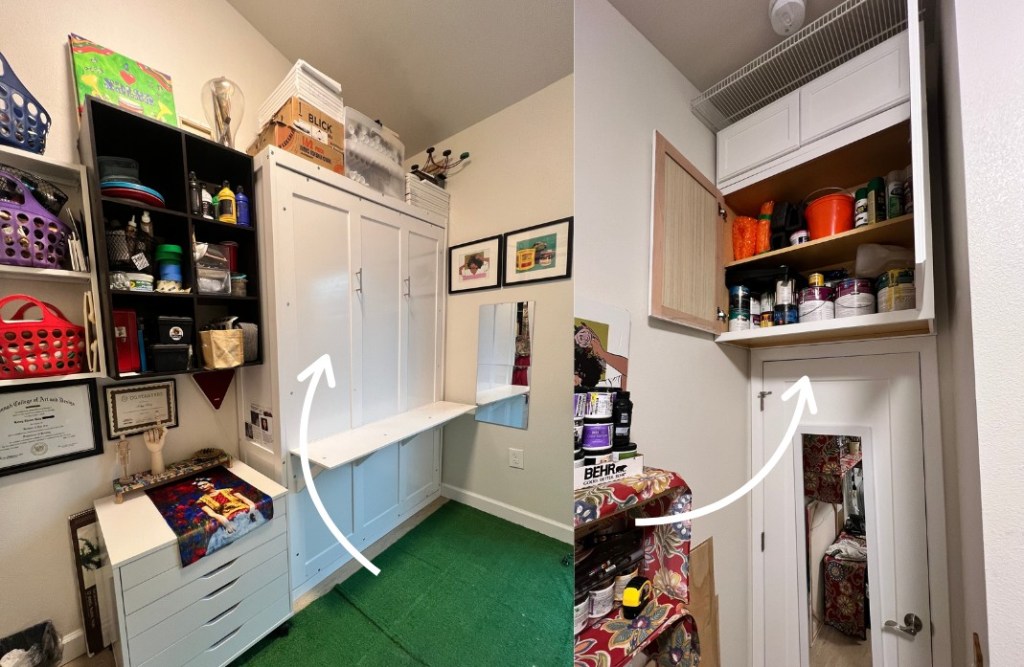
Ketsy’s Organized studio
Categories
Abstract and Op-Art

Navigating the Art Show Circuit: Galleries, Communities, and Homes

Gallery Artshow, art by @romartinezart

Finding the Right Stage for Your Art Show

​Hey fellow creatives,

​Putting your artwork out into the world is a massive leap of faith, and choosing where to show it is half the battle. Over the years, I’ve learned that every venue brings its own unique energy, advantages, and learning curves.

​If you are trying to figure out where to hang your latest collection, here is a realistic breakdown of the three major exhibition paths, based on the highs and lows of real-world experience.

  1. ​Established Galleries: The Gold Standard

​For many artists, a reputable gallery is the ultimate goal—and for good reason. The sheer volume of logistics they handle can make the financial trade-off entirely worth it.

​The Pros: They bring a built-in audience of active collectors and steady foot traffic. They also handle the heavy lifting: curating, marketing, managing the opening, processing sales, wrapping, and shipping.

​The Cons: Premium service comes at a premium price. Galleries typically take a 35% to 50% commission on sales. However, you will often find you sell more volume here and for more money than anywhere else.

  • ​Community Spaces: Churches, Civic Centers, & Commercial Hubs

​Pop-up shows in everyday local venues are excellent for grassroots exposure, though sales heavily depend on the venue’s daily foot traffic.

​The Pros: Low barrier to entry, great local promotion, and a chance to introduce your work to a diverse demographic.

​The Cons: Mixed intent. Visitors are often there to attend worship, take a fitness class, or pay taxes. Because they aren’t in a “buying mindset,” converting a viewer into a collector takes extra effort.

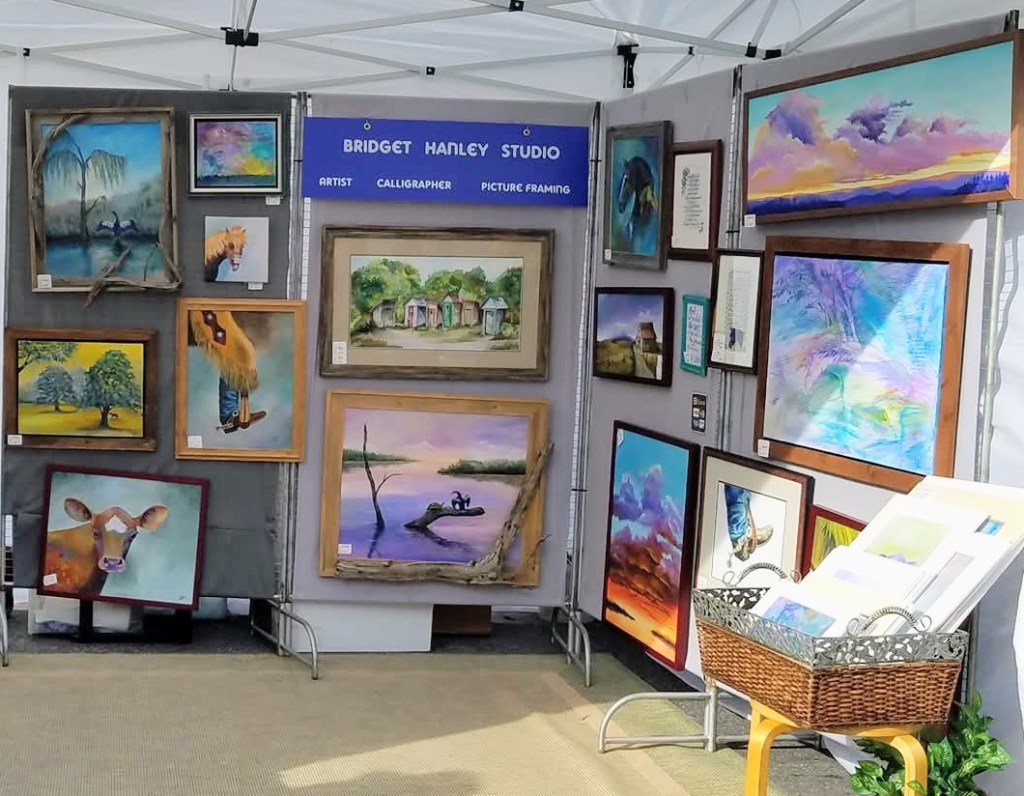
Festival Art Show, art by @bridgethanley

  • Intimate Home Art Shows: The Hidden Gem

​Hosting an exhibition in a private residence flips the traditional gallery model on its head, trading massive foot traffic for deep, intentional connections.

​The Pros: You keep 100% of your sales. The relaxed, low-pressure environment allows you to have meaningful, unhurried conversations about your creative process.

​The Cons: The reach is entirely up to you. You are 100% responsible for the guest list, ambiance, catering, and closing the sales yourself.

​Master the Art of the Home Show Invitation

​Because a home show relies entirely on your personal network, how you invite people matters. Here is how to pack the room with a warm, supportive crowd:

​Make it Exclusive, Not Preachy: Frame the invite as a special peek behind the curtain. Use phrasing like: “I’m opening up an intimate space to share the stories behind my newest collection before it goes public, and I’d love for you to be a part of it.”

​The “Plus-One” Strategy: Encourage your core supporters to bring a friend. Tell them: “Space is cozy, but feel free to bring a friend who loves local art or a good glass of wine.” This instantly expands your network with trusted referrals.

​Send Direct, Personalized Messages: Massive email blasts get ignored. Reach out individually via text or direct message to your top 20-30 contacts. A simple, “Hey [Name], I’m hosting a small art evening at the house on Friday the 12th. It would mean the world to have you there!” is incredibly hard to turn down.

​The Takeaway

​No matter where you are in your creative journey, the most important thing is to get out there and promote your work. Beginning artists may not have access to reputable galleries right away—and that is completely fine. Start small, embrace your community, and build your audience one connection at a time.

“Art shows and festivals are the best places to meet people and demonstrate and talk about how I go through the process of my art. Talking in real time, and showing people the process of making the art, gives value to the work. And people are much more appreciative of what I do when they know what is involved. They are much more likely to support me when they see things in person.” Bridget Hanley

http://www.bridgethanleystudio.com

​Keep creating,

~Ro Martinez Rimes

Categories
Abstract and Op-Art

Benefits of Volunteering

http://www.angelamannphotography.com

Use your skills and talents to volunteer helping the elderly, mentally or physically disabled at nursing homes, daycare, or hospitals. Helping them create their own masterpieces, using a variety of senses is a great way to use your artistic God-given talents.

Categories
Abstract and Op-Art

Benefit of the Arts

ROMARTINEZART

http://www.angelamannphotography.com

The arts enrich the lives of both artists and audience. We can enjoy the talents of others, embracing the arts through a variety of senses, or we can bring joy to others by becoming an artist, musician or dancer. Experimenting with canvas and paintbrush can help you get in touch with your creative side, so don’t put it off any longer. If your dream has been to take voice, or dance lessons, it is never too late. Perhaps you have imagined playing the piano or other musical instrument; now is the time to start.


Art has a positive influence on us, and may improve our health as well, because art and music have been linked to lower blood pressure, improved mood, and a number of other benefits.


Art is attending a gallery to see the work of a featured artist, listening to a talented street musician playing a musical instrument, or watching the ballet performed beautifully on stage. Here are some ways you can bring the arts into your life.


ART
Visual art can include painting, drawing, sculpting, and photography. Creating a masterpiece on a blank canvas, getting your hands dirty to design a one-of-a-kind clay piece of pottery, or picking up a camera and capturing a moment in time are ways to express your inner voice. To be inspired, attend galleries and museums, or search the web for ideas. Never copy another artist, create original pieces that express your voice and style.


MUSIC
Music can be shared at a concert or as part of a play on stage. Voice lessons will help you learn how to read music and breathe properly. Or simply do what I do – enjoy the music and sing in the shower.


DANCE
Dance is about being self-expressive, allowing the music to move you. Even if you do not have rhythm or know all the latest dance moves, the benefits of moving to music are many. I love cleaning the house with powerful energizing music. I get a workout while trying out some new moves. To learn dance styles, join a gym or dance studio and take regular classes. Be prepared to have fun while burning calories and getting fit. Watch the stress of the day evaporate.


Art therapy is a way to heal the mind or body by exposure to any of the art forms or producing art itself. The arts can be therapeutic for people suffering from a variety of physical, mental, or emotional problems and disorders. Some of the benefits are:


.Reduced Stress
.Decreased Depression
.Reduced Anxiety
.Improved Mood
.Help with Post Traumatic Stress Disorder
.Help Stroke Patients Recover Motor Skills
.Reduced Heart Rate and Blood Pressure
.Help With Alzheimer and Dementia Patients
.Increased Circulation


Make time to enjoy the arts with family and friends and create memories that are lasting. Treat yourself to a performance or experience the many forms of art available in your area. The therapeutic and health benefits may extend your life and help you form closer bonds with others. Make art, music, and dance a part of your daily routine and experience the joy of the arts.

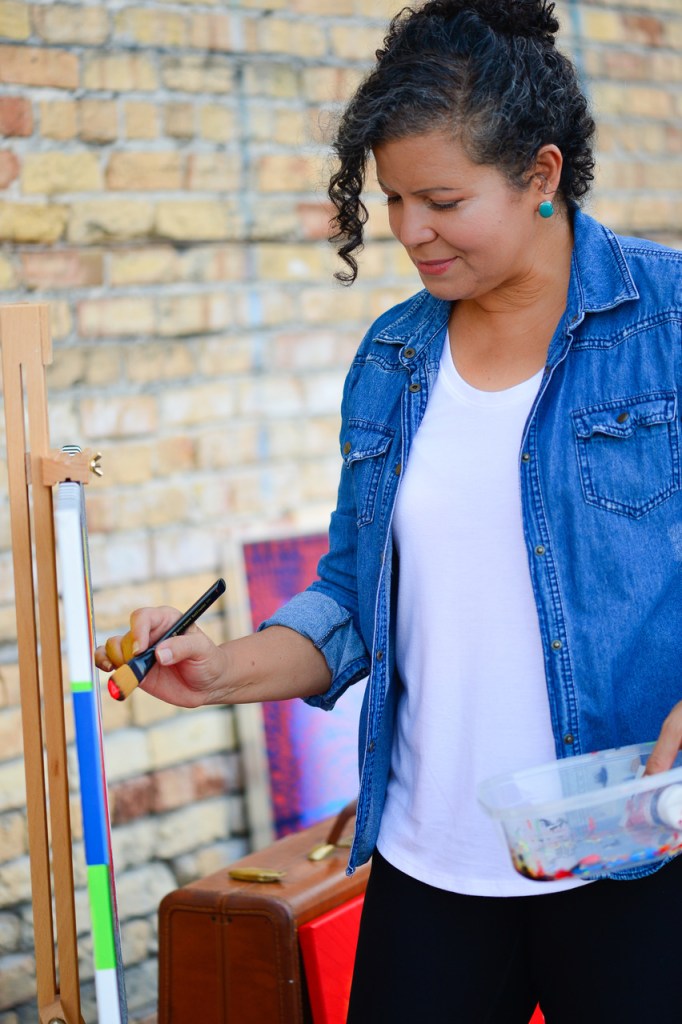
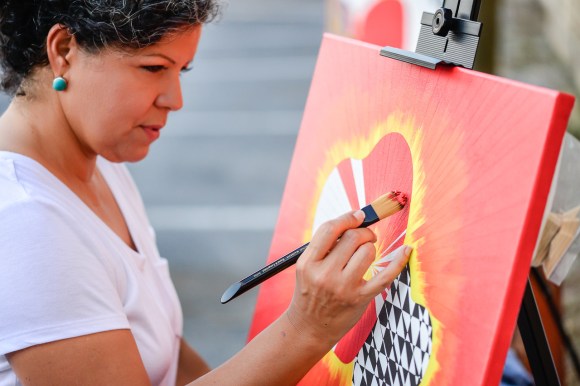
Ro Martinez Rimes is an Op-Art and Abstract artist.